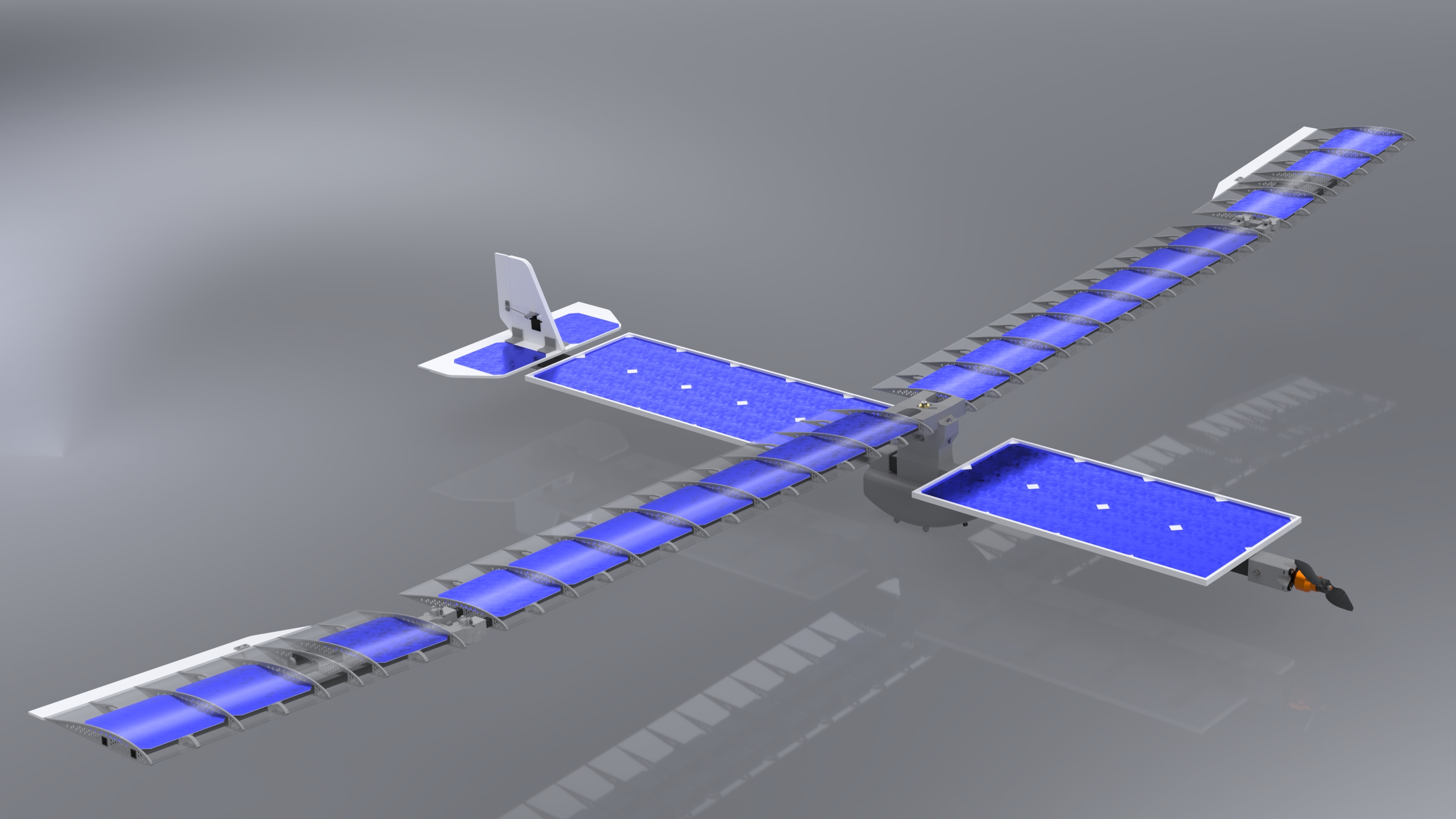
SPMA Ranger
Solar-Powered Modular Aerial Ranger
Overview
The SPMA Ranger is an autonomous unmanned aerial vehicle designed to combat wildlife poaching in remote areas. The aircraft features a folding wing mechanism for easy transport and deployment, integrated solar panels for extended flight time, and a modular payload bay for surveillance equipment.
As Team Lead, I managed a team of 6 engineers through the full design cycle: requirements definition, aerodynamic analysis, structural design, manufacturing, and flight testing. I was responsible for the wing structure, folding hinge mechanism, and overall CAD assembly.
Senior Design Capstone Project - Columbia University MECE E3430
Specs
Wingspan
10 ft
Folds to 5 ft for transport
Weight
6.5 lb
Carbon fiber construction
Solar Panels
40
Integrated into wing surface
Cruise Speed
35 mph
Optimized for endurance
Wing Design
Airfoil Selection
We selected a Clark Y airfoil for its gentle stall characteristics and flat bottom surface compatible with surface-mounted solar panels. The 8.4-inch chord accommodates 5-inch wide solar cells while leaving room for a 0.4-inch diameter steel hinge rod.
Folding Mechanism
The wing folds at the root via a steel rod running through both panels. A locking pin engages when fully deployed. This allows the 10-foot wingspan to fold in half for transport and rapid field deployment.
Internal Structure
3D printed ribs with hexagonal lightening patterns, a carbon fiber main spar, and MonoKote skin. This hybrid approach balances strength, weight, and manufacturability.
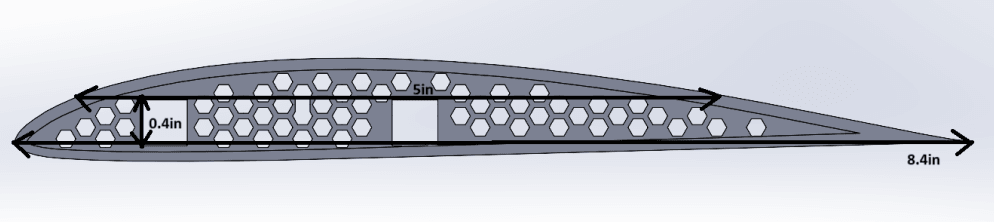
Wing rib cross-section: 8.4" chord, Clark Y airfoil
Structural Analysis
Load Validation
We performed FEA in SolidWorks Simulation on all critical load-bearing components. The design load case was a 3g pull-up maneuver at max gross weight. We targeted a minimum Factor of Safety of 2.0 for all structural components.
Critical Components
The wing hinge assembly, wing-to-fuselage mount, and motor mount. The hinge was particularly critical since it carries the full wing bending moment at the fold point. We applied distributed lift loads and ran static studies with PLA and aluminum material properties.
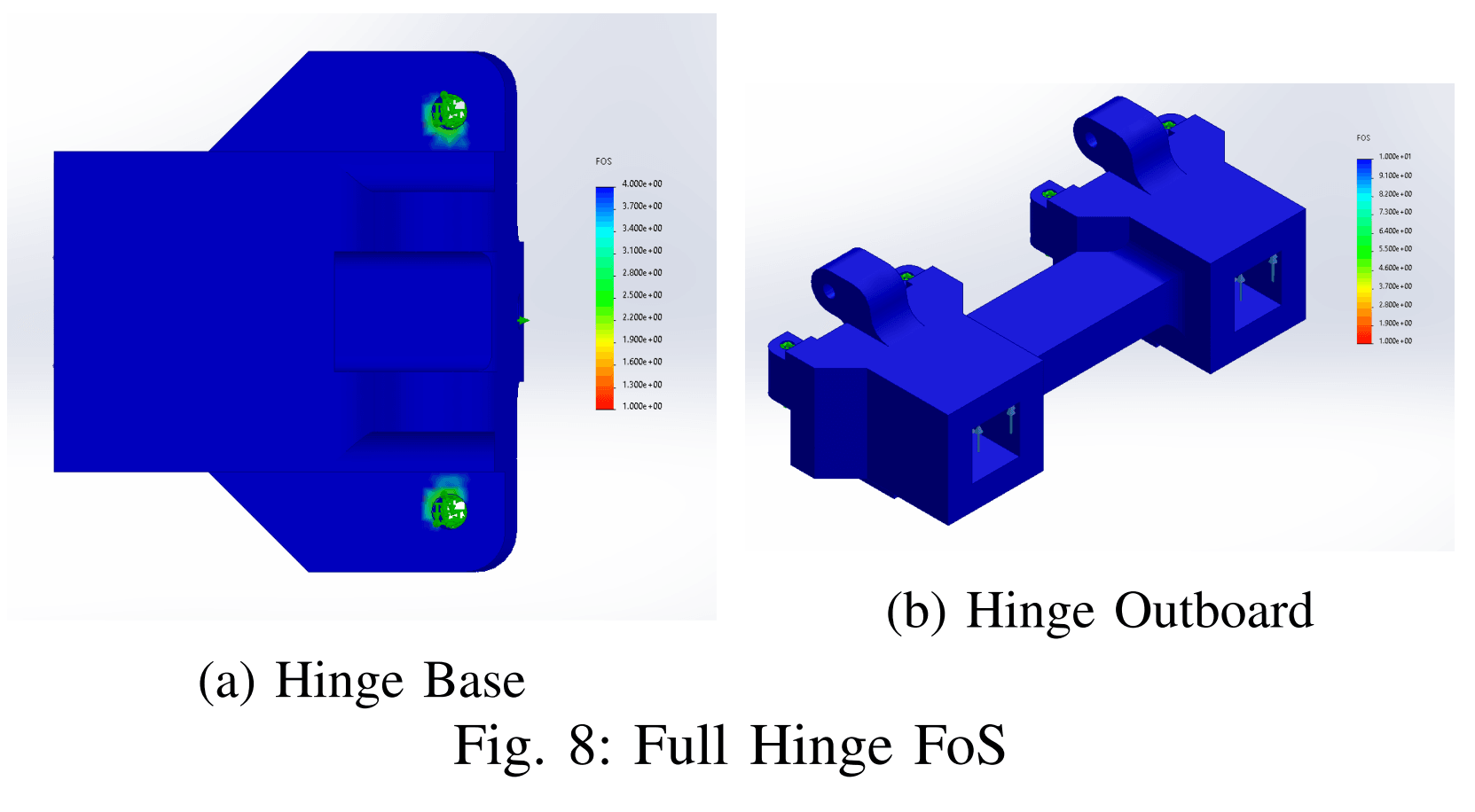
Wing hinge FEA - Factor of Safety > 2.0
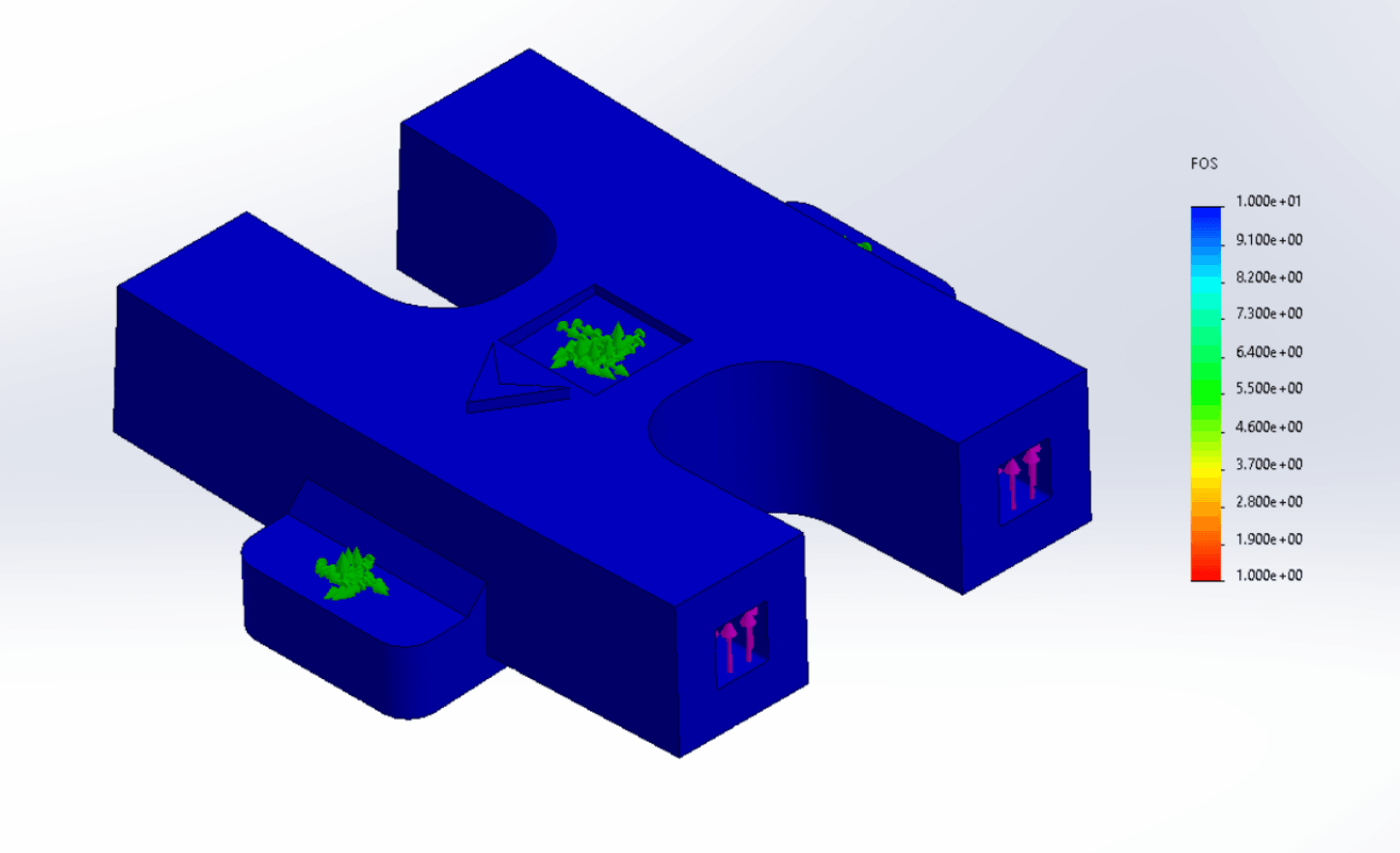
Wing mount FEA - Factor of Safety > 2.0
Manufacturing
Fabrication Methods
3D printing (PLA) for wing ribs and structural brackets, carbon fiber layup for the main spar, and MonoKote film for the wing skin. The fuselage uses laser-cut plywood ribs with fiberglass skinning.
Tail & Control Surface Sizing
We used historical data and XFLR5 stability analysis. The horizontal tail volume coefficient was set to 0.5 and vertical tail to 0.04. Control surface chord ratios were 25% for elevator/rudder and 20% for ailerons. Servo torque was calculated from hinge moment coefficients at max deflection.
Control Actuation
Standard RC servos with push-pull rod linkages. The tail uses guide tubes to route control rods from servos mounted in the fuselage. Bamboo skewers serve as lightweight support struts.
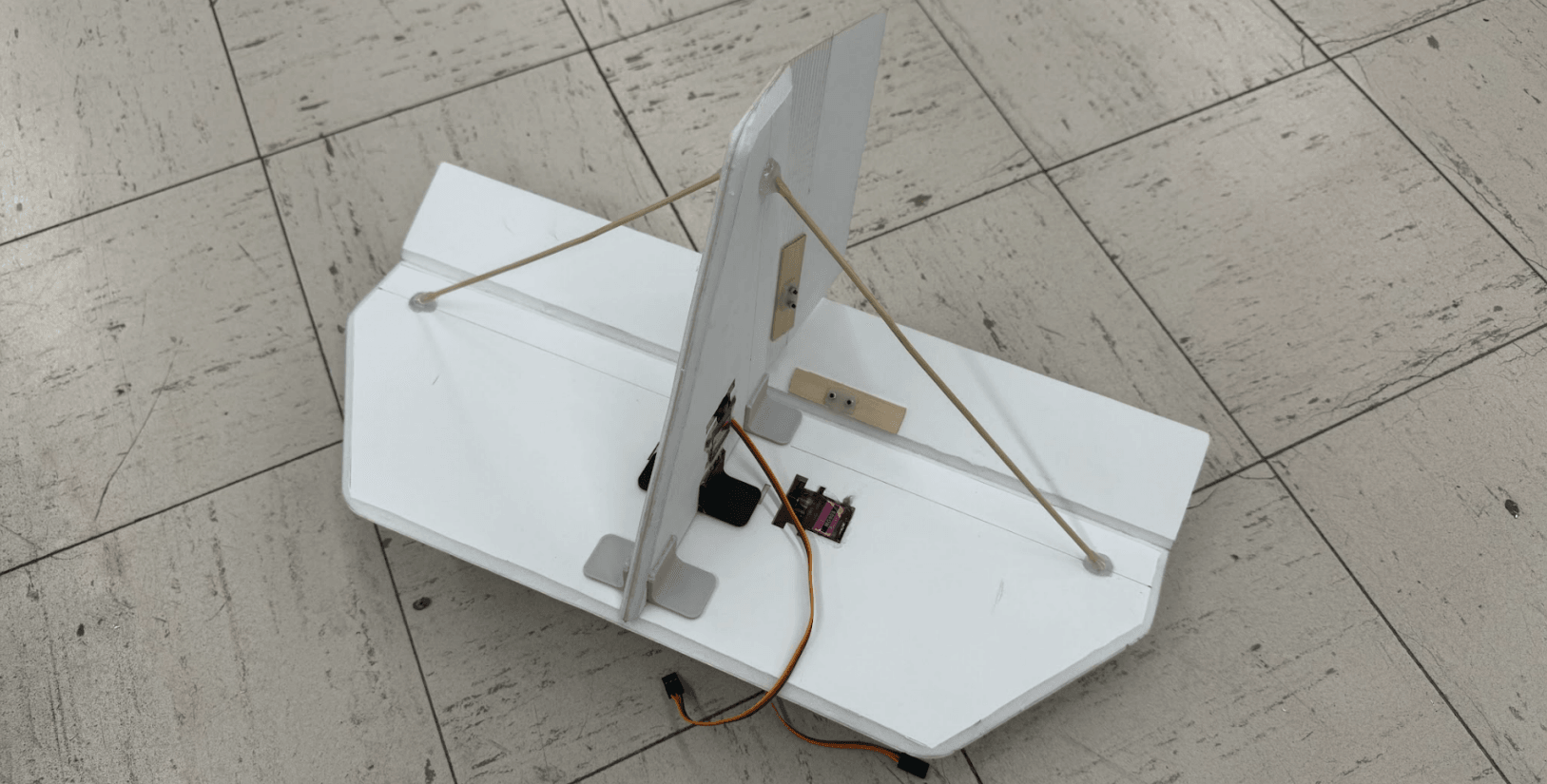
Tail assembly with servo, control linkages, and support struts
Flight Test
The SPMA Ranger completed its maiden flight successfully, demonstrating the folding wing deployment and basic flight characteristics. The solar panels provided supplemental power as designed.
However, the test ended with a hard landing caused by undersized ailerons. Initial roll authority calculations underestimated the control surface area needed at low speeds, resulting in insufficient response during the landing approach.
Lesson Learned
Always include adequate safety margins on control surface sizing, especially for unconventional configurations. The conservative XFLR5 predictions should have been validated with larger surfaces during initial test flights.
Despite the landing incident, the project successfully demonstrated the viability of a solar-powered folding-wing UAV for long-endurance surveillance missions.
Test Flight
First and only test flight
Project Overview
Want to see more?
View All Projects