Robotic Linkage Mechanism
Overview
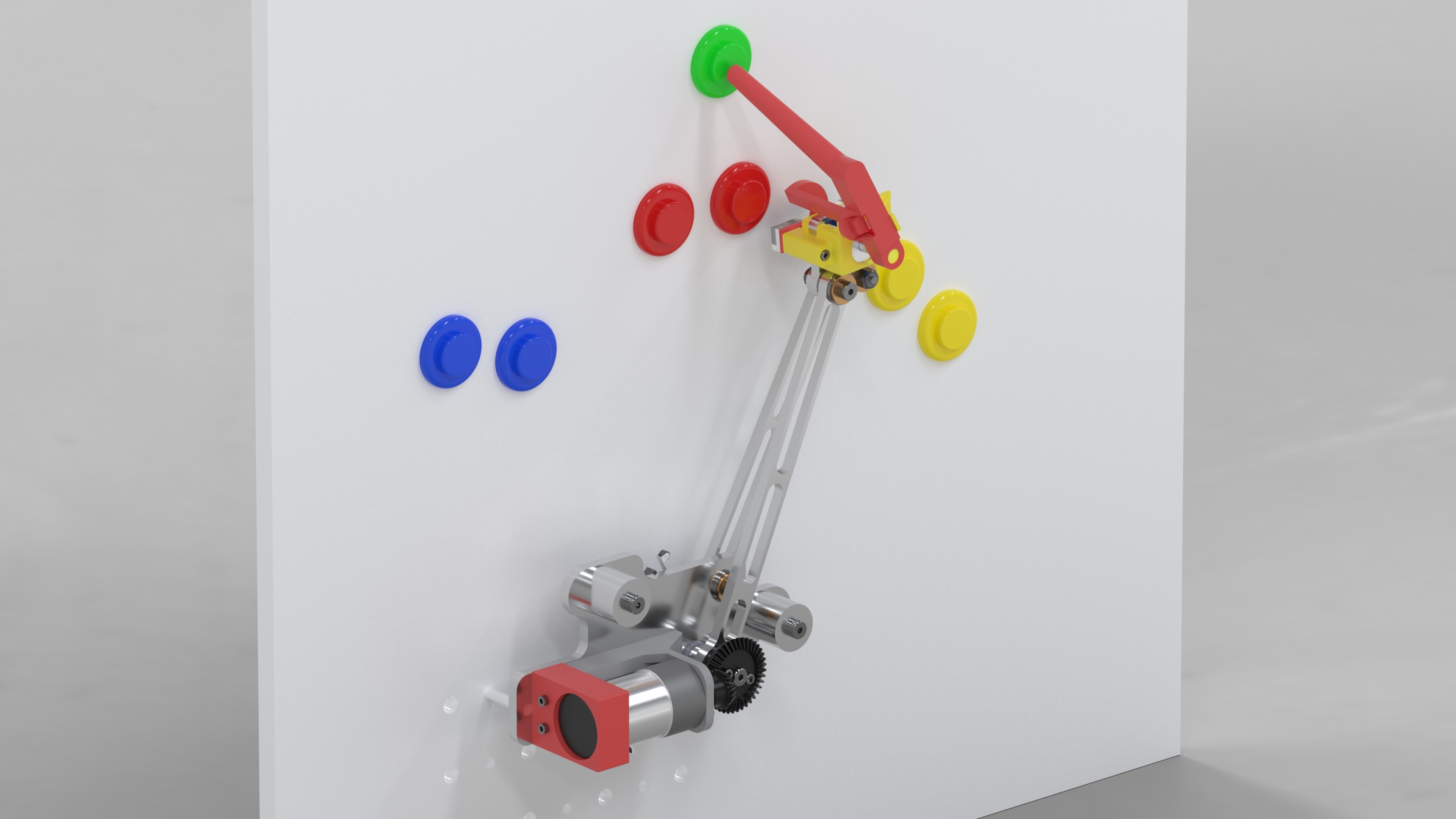
Collaborated with a team to design, build, and control a complex four-bar linkage mechanism that autonomously presses arcade buttons as quickly as possible. This project encompassed the entire machine design process: from kinematic planning and mechanism synthesis, to detailed 3D modeling with GD&T tolerancing, manufacturing of aluminum components, transmission design using inertia matching, and closed-loop position control with PID tuning.
As Lead Designer and Machinist, I created the complete CAD assembly, produced all engineering drawings, and personally machined every component of the linkage mechanism.
Note: This was the first year with a new rule limiting teams to a single solenoid. Previous years allowed unlimited, so this added a significant design constraint for the button pressing mechanism.
Specs
Volume
236 in³
Max allowed: 15,000 in³
Transmission Angle
57.3°
Max deviation: 60°
Budget Used
$77.54
of $100 allowed
Gear Ratio
2:1
Bevel gear transmission
CAD & Renders
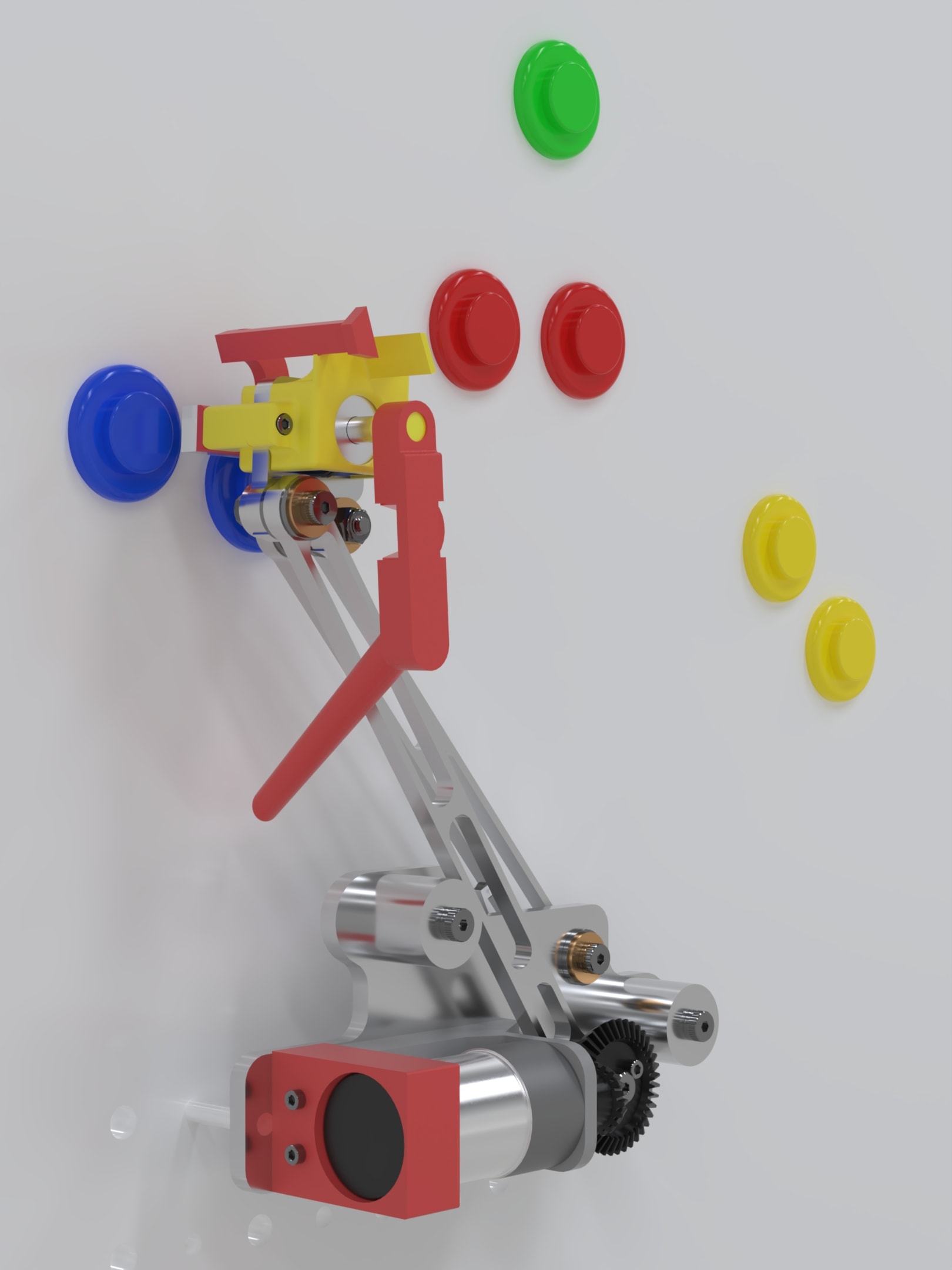
Four bar linkage assembly
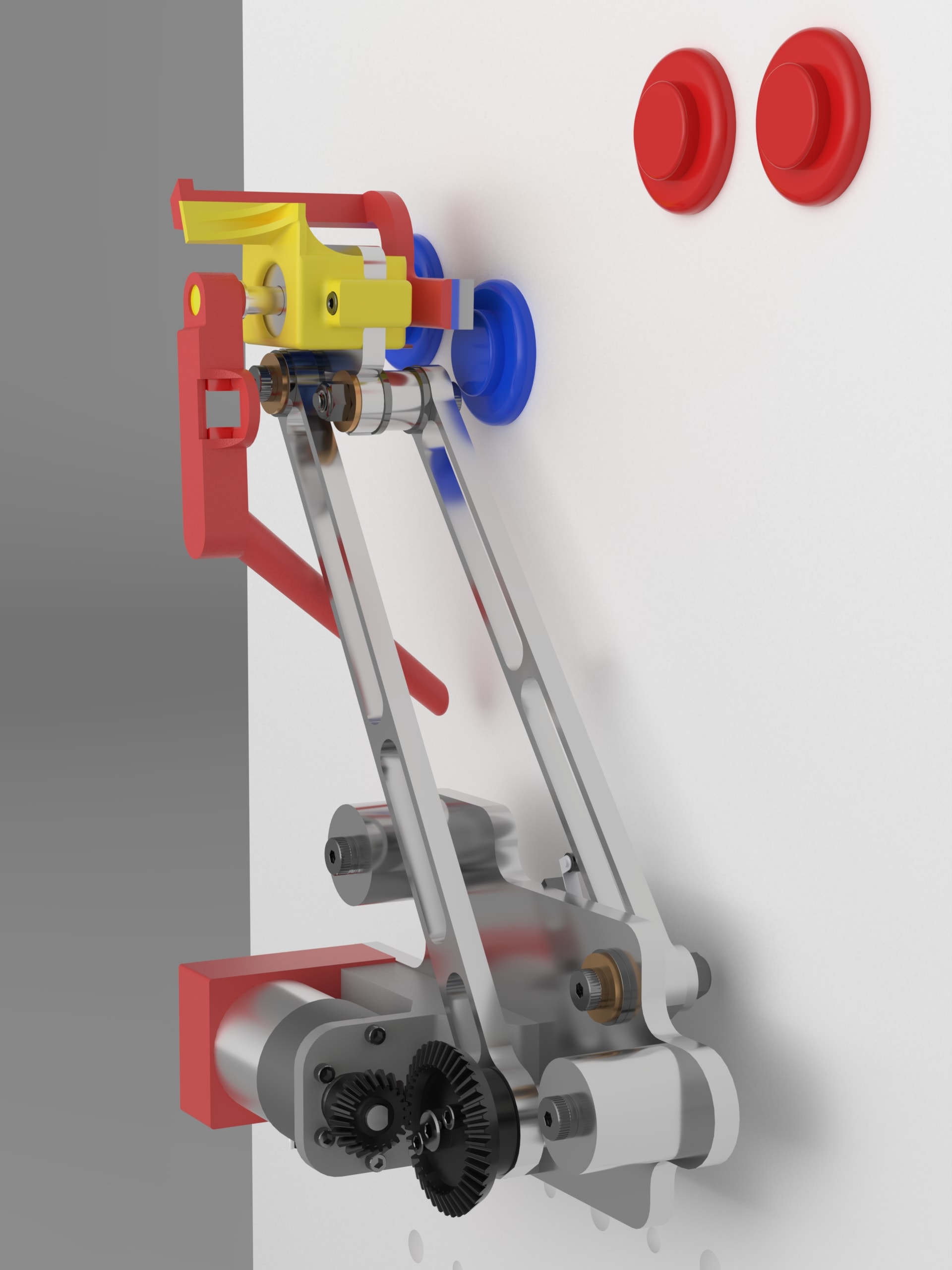
Isometric view with motor and transmission
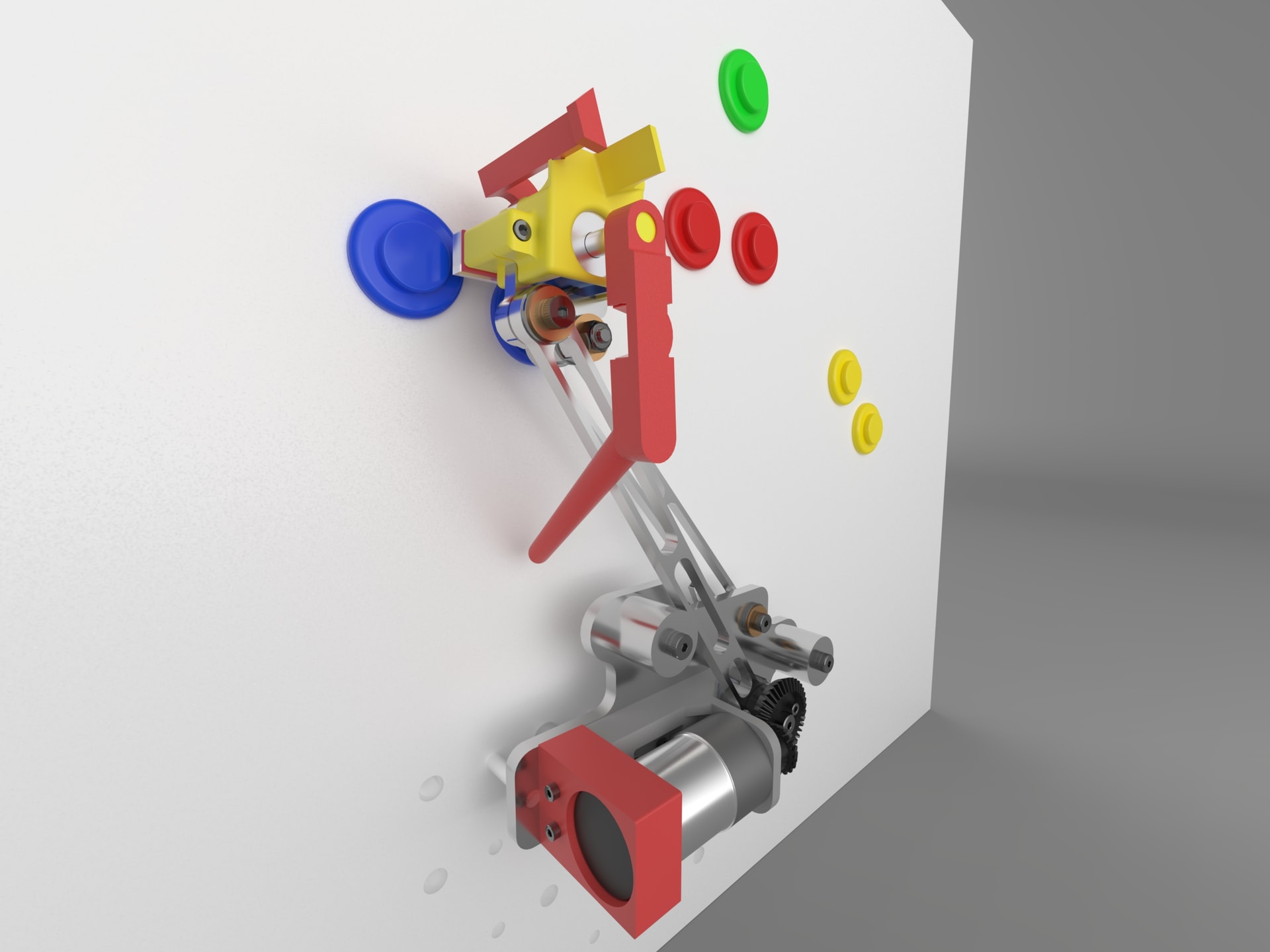
Bonus button mechanism at resting position
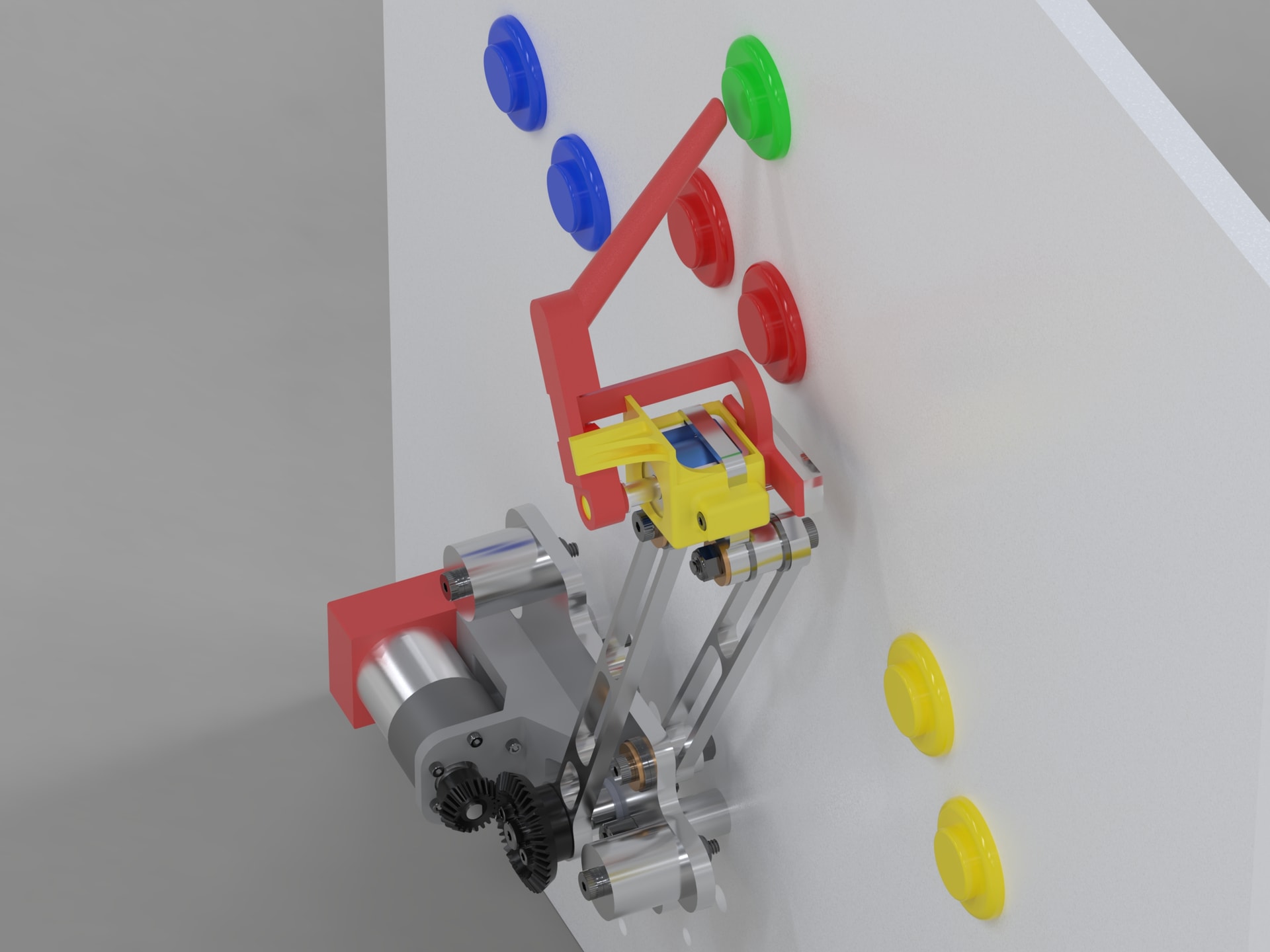
Bonus button mechanism in engaged position
Machining
As lead machinist, I fabricated every component of the linkage using CNC and manual machines in the teaching lab. This included waterjet cutting, milling, lathe work, drilling, reaming, tapping, and press fitting bearings.
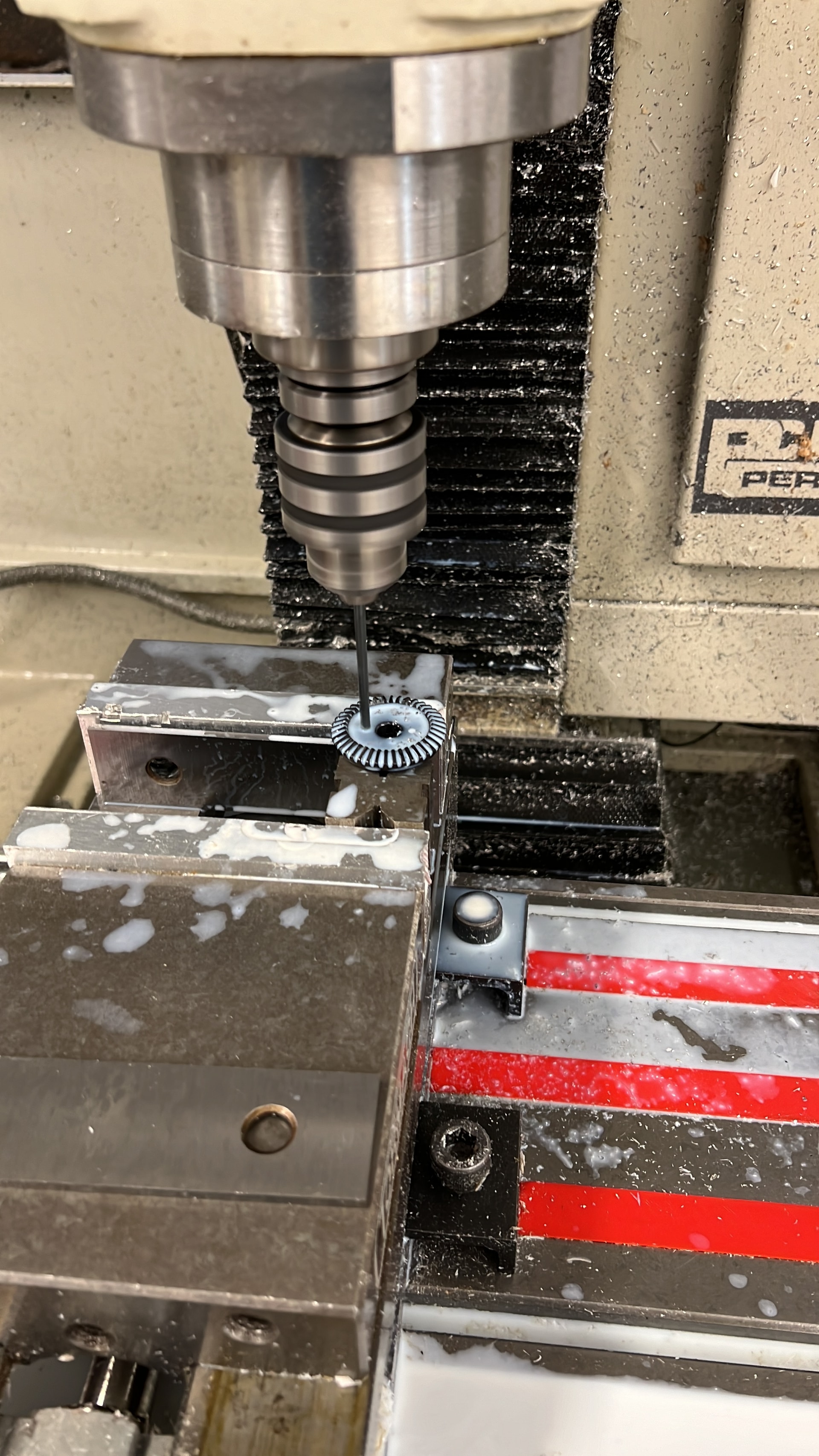
Machining the bevel gear on the mill
Final Assembly
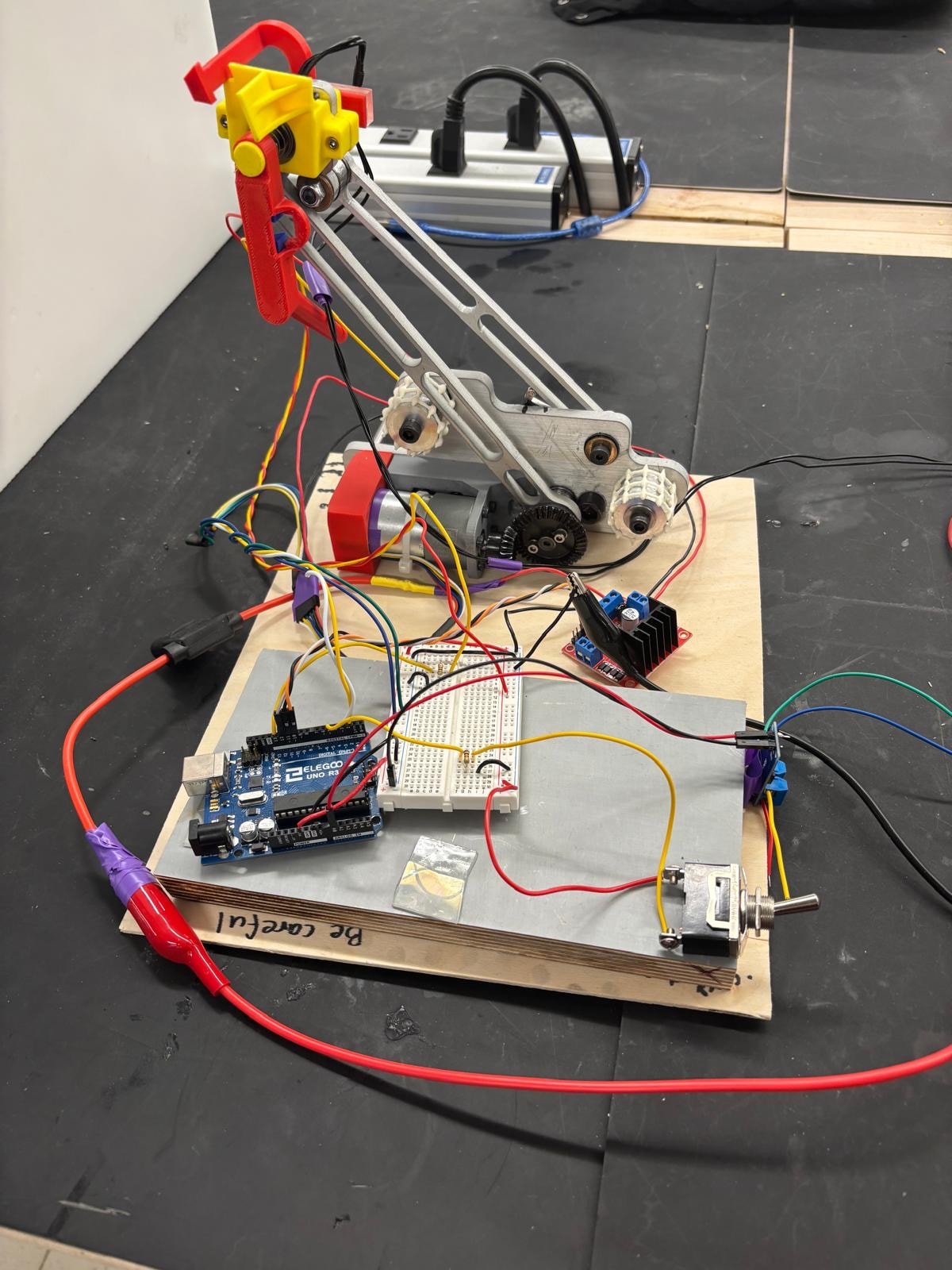
Complete assembly with Arduino, motor driver, and wiring
Bonus button mechanism in action
Bonus Button Mechanism
The green bonus button awards +3 points but is positioned outside the reach of the main linkage. I designed a custom 3D printed mechanism with a spring loaded locking arm that extends to press the bonus button when the linkage reaches a specific position.
The arm locks into place using a cam mechanism, ensuring reliable button actuation without requiring additional motors or solenoids.
In Action
Lessons Learned
This project reinforced the importance of tight tolerances in mechanical assemblies. Even small misalignments in press fit bearings or improperly reamed holes caused binding in the linkage. I learned to measure twice, cut once, and to build in adjustment mechanisms for components like the motor mount and hard stops. The iterative process of testing, identifying issues, and refining the design was invaluable experience for real world engineering.
Want to see more?
View All Projects