Digital Food Printer
Overview
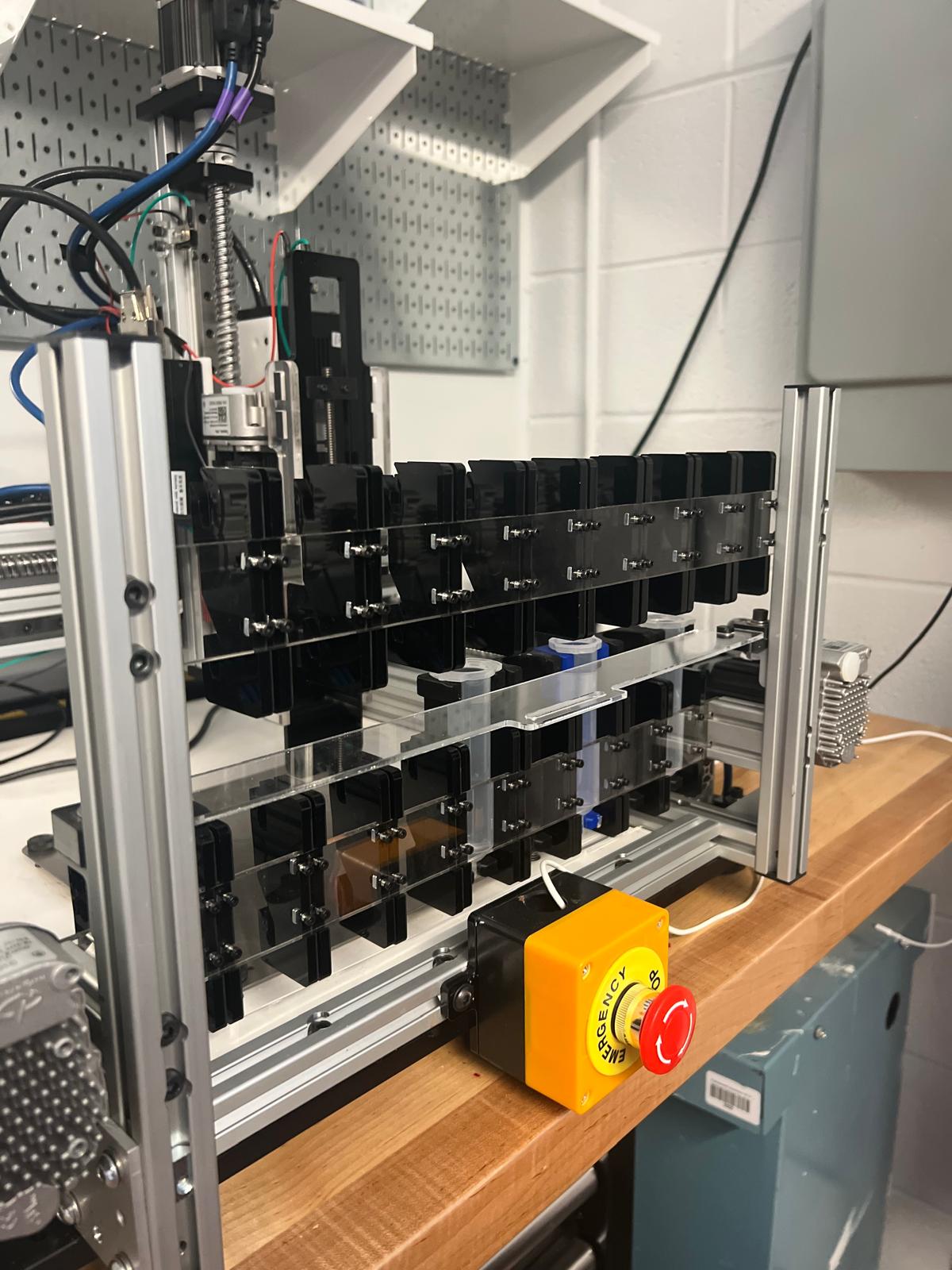
At Columbia University's Creative Machines Lab, I worked on a 3D food printer that fabricates edible items through computer-controlled material deposition and laser cooking. The printer uses interchangeable tools for different ingredients: pastes, liquids, and powders.
My task was to redesign the powder dispensing tool. The existing rack-and-pinion mechanism required too much force to operate within the printer's actuation limits. I designed a new solution using a pepper muller that only needs vertical pressing, ideal for the printer's Z axis motion.
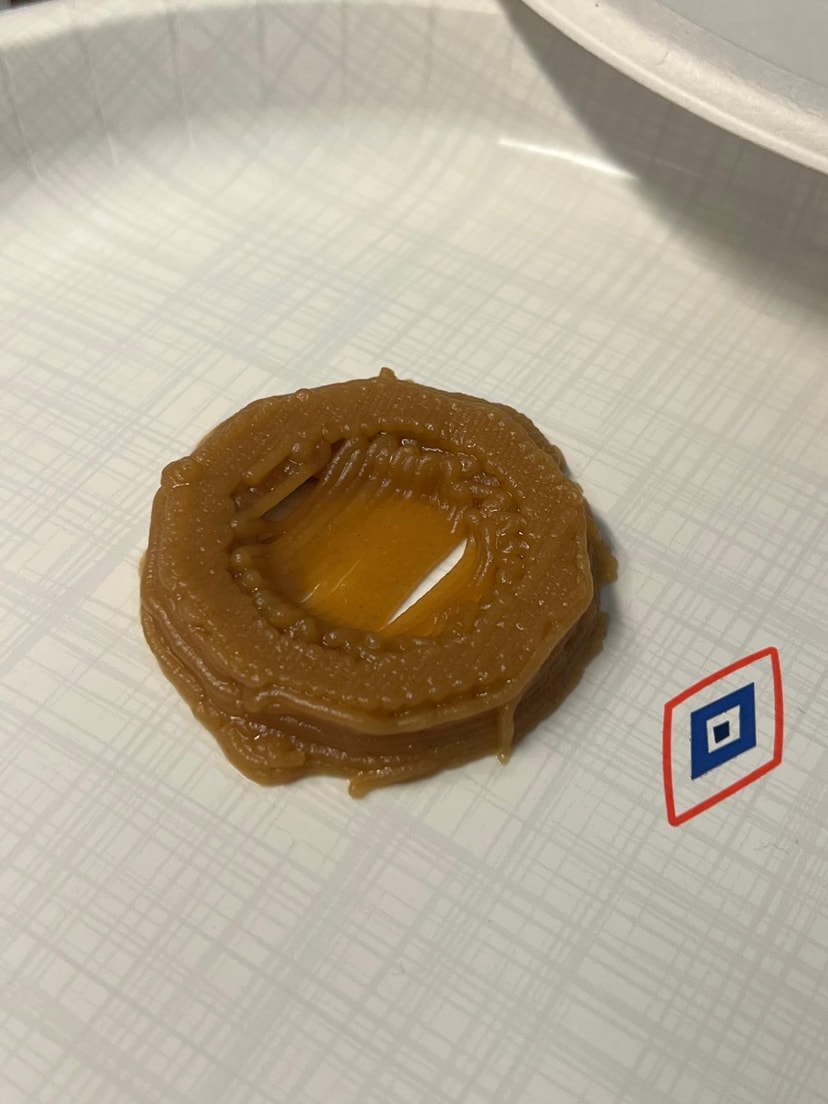
3D printed cookie from the lab
The Problem
The pepper muller I selected stood at 6 inches, but the tool rack only allowed 4.5 inches of clearance. After discovering that removing the rack's middle platform gave extra space, my target height became 5.5 inches.
I used the existing paste dispenser as a template. The new design needed matching magnet positions for the automatic tool changer and extrusions that interface with the rack's mounting slots.
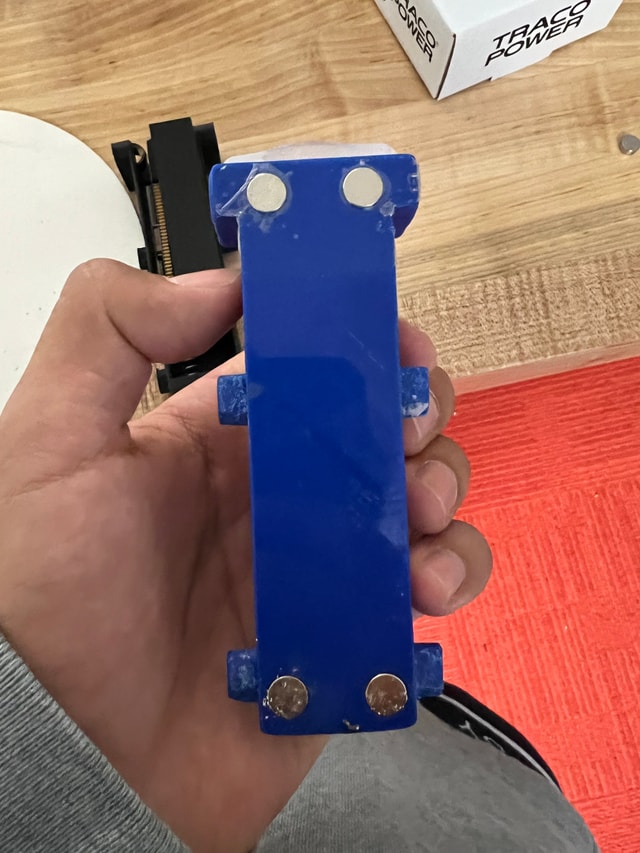
Paste dispenser reference with magnets visible
Design
I reverse-engineered the pepper muller in SolidWorks by measuring each component with calipers. Then I designed a holder around it, building on top of the paste dispenser's CAD model to ensure proper magnet and slot alignment.
The holder features securing arms at multiple heights, a bottom platform with a centered hole for powder exit, and side extrusions that lock into the tool rack.
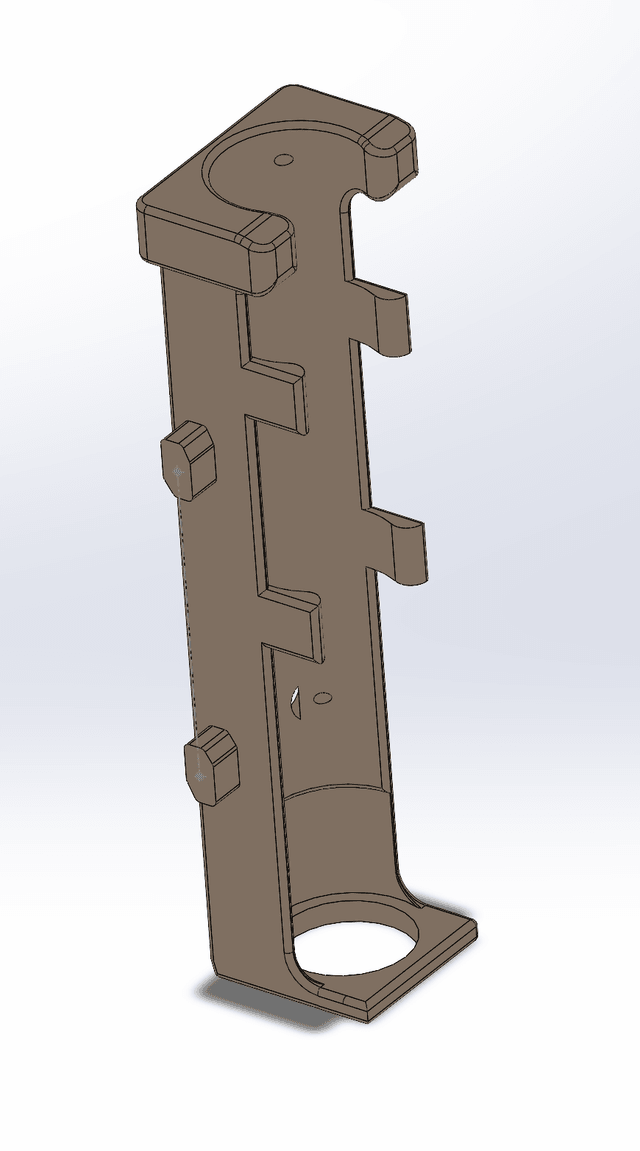
Tool holder designed in SolidWorks
Fabrication
Using a lathe, I machined the stainless steel muller components to reduce overall height. The bottom piece was trimmed by 0.5 inches from its hollow section. One thin-walled component was crushed in the chuck due to excessive clamping force, but having a backup muller saved the project.
The holder was 3D printed in ABS-R with 0.1mm layer height and 20% infill density for a balance of strength and print time. Total print time: 13.5 hours.
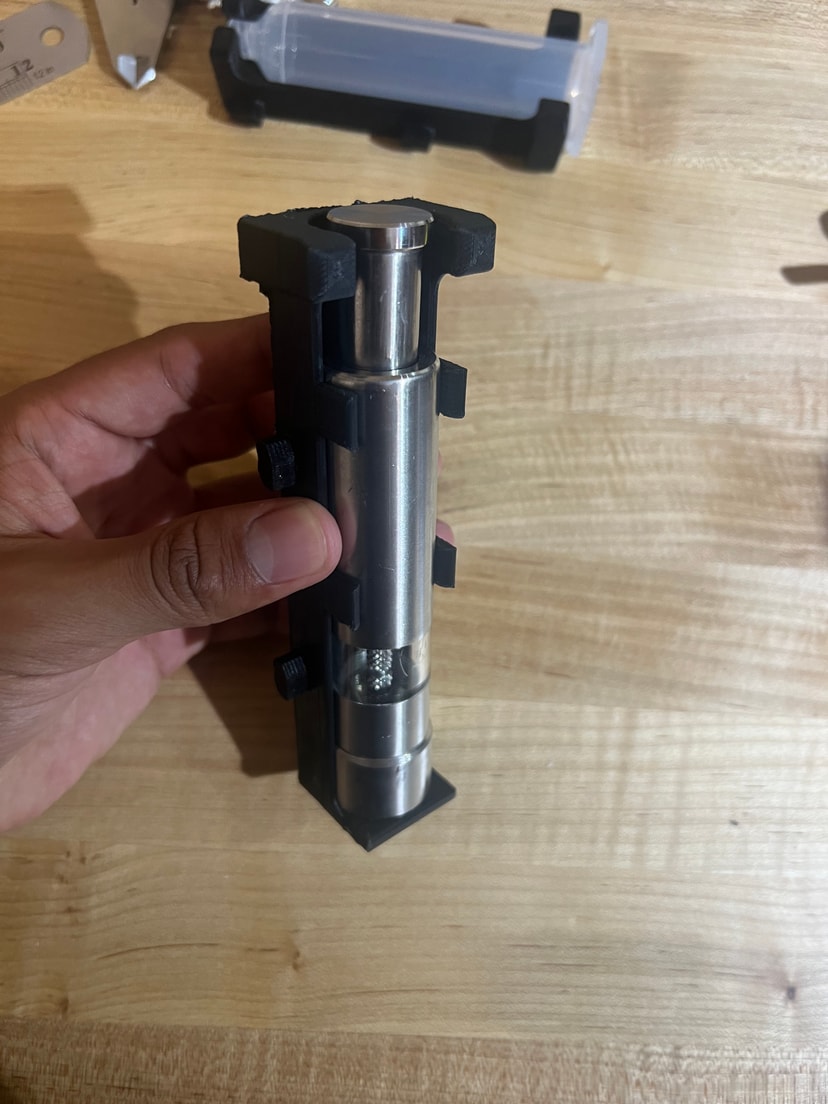
Side view with muller installed
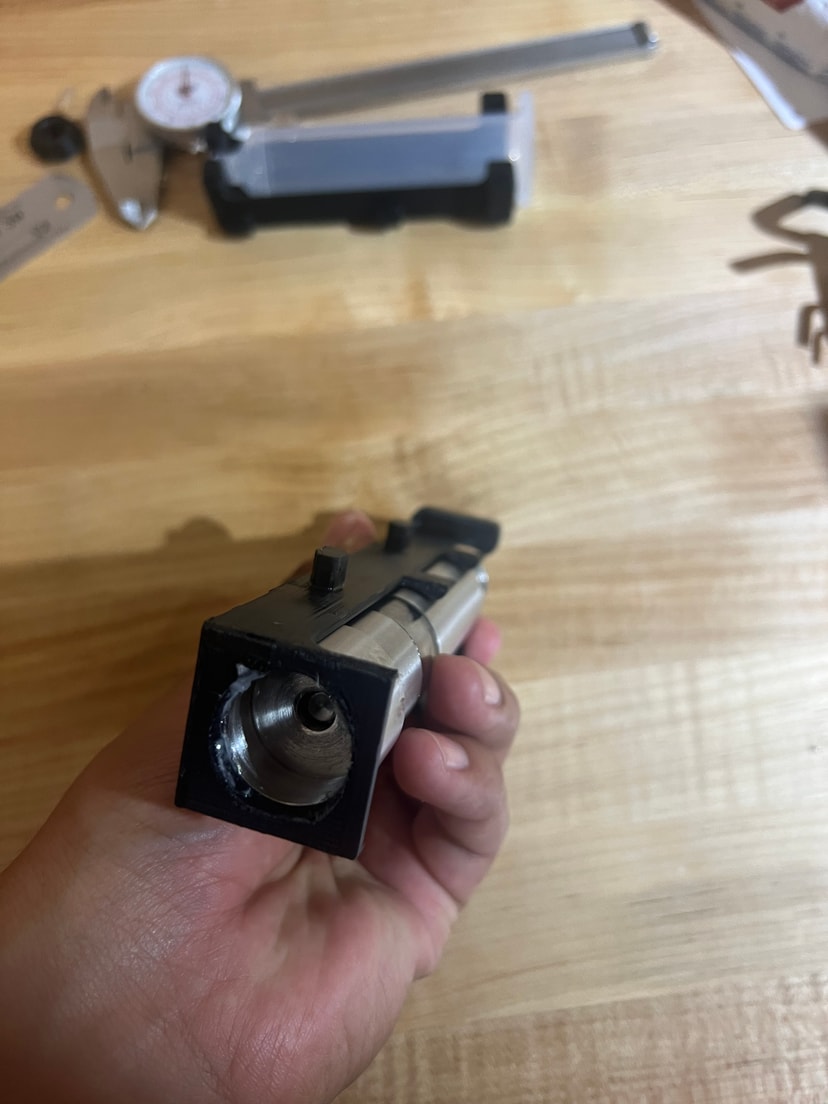
Bottom view showing powder exit
Wiring
Beyond the powder tool, I also worked on a secondary test printer used for cookie printing experiments. I crimped and routed wiring for the limit switches, which trigger when each axis reaches its boundary, allowing the controller to home the machine and establish a reference position for the coordinate system.
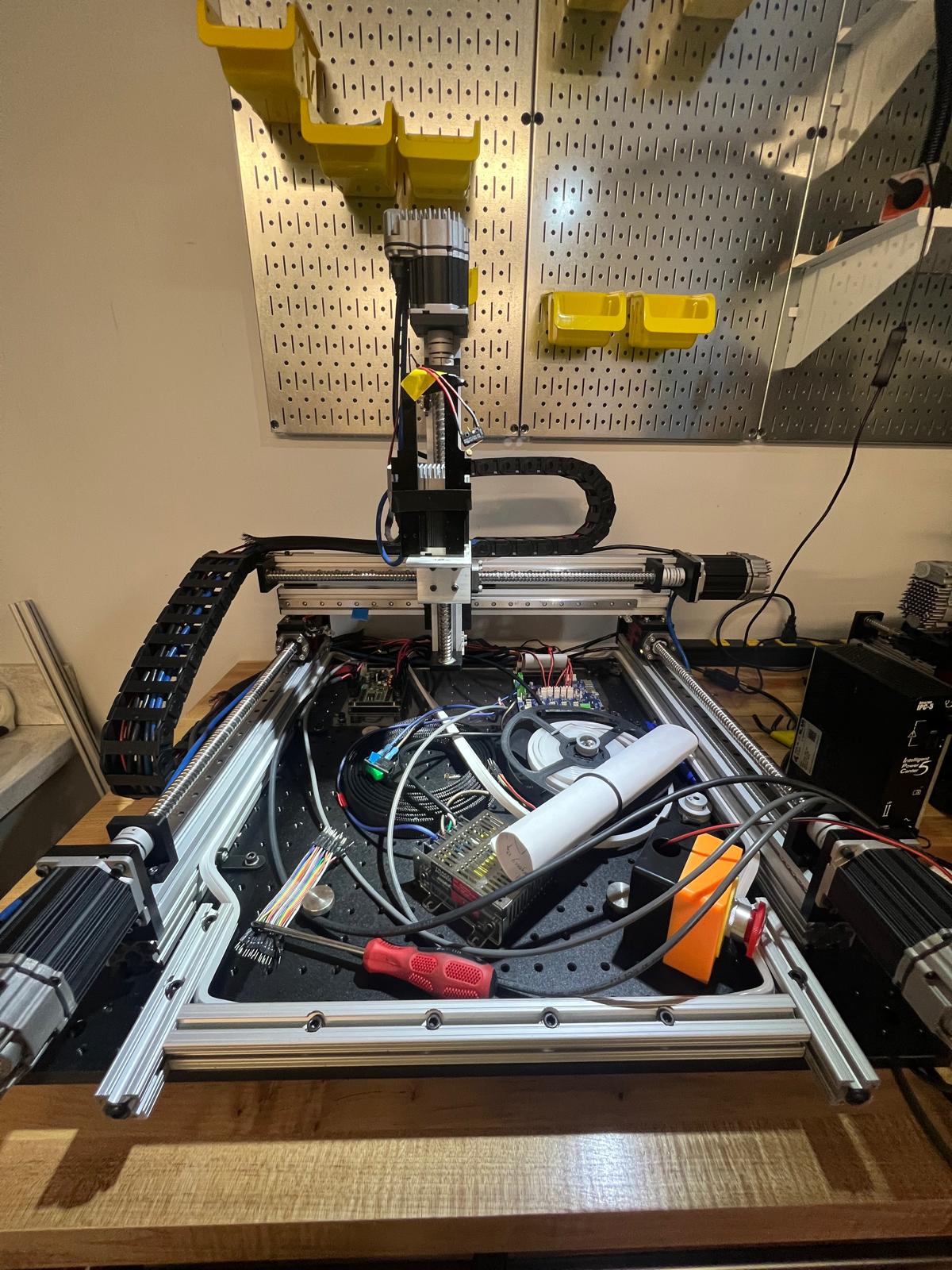
Secondary printer with my limit switch wiring
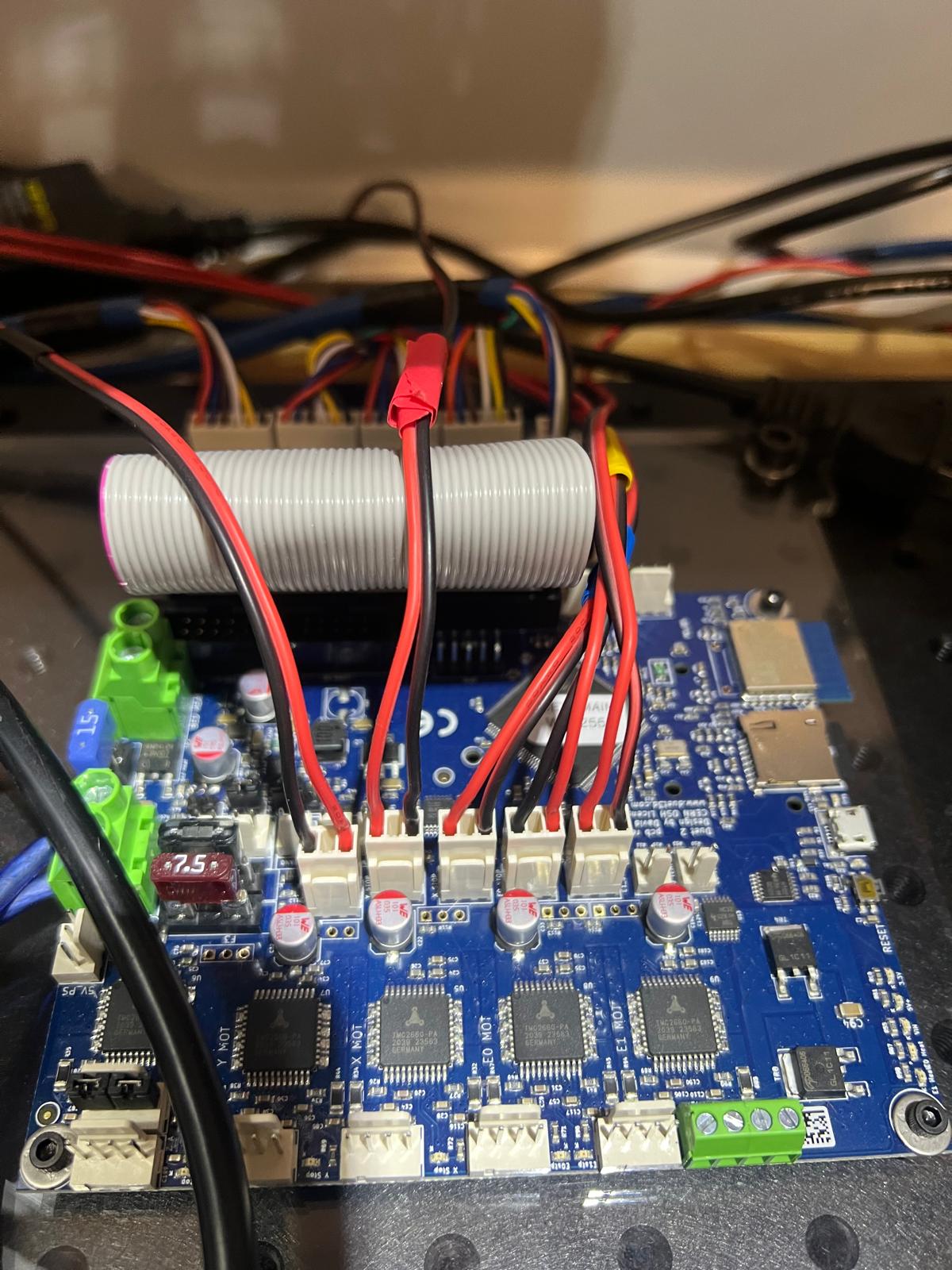
Control board with limit switch connections
Want to see more?
View All Projects